
Brown County Estimated Versus Actual Release
Kansas calls the public KASPER field Anticipated release date. “Projected” and “estimated” explain the idea, but they are not the field label. The date comes from a sentence computation and may change. It is not proof that the person left custody. Read later movement, supervision, location, and discharge information to determine what happened.
A pretrial Brown County Jail detainee may have no fixed release date. Bond execution, dismissal, a court order, time served, transfer, and other holds can control the next event. A sentenced county-jail inmate may have a local calculation that KASPER never displays. State-prison cases use KDOC records and sentence computation.
Find Brown County Release Dates
For a state case, begin at the KASPER gateway. Search by full name or KDOC number. Advanced criteria include conviction county, birth details, parole-supervision county, and supervision type. Conviction County = Brown can narrow a state-case search, but KASPER is not the county-jail roster.
- Obtain the sentencing journal entry.
- Identify the offense date, severity, sentence structure, jail credit, and concurrent or consecutive relation.
- Match the person in KASPER and read the Anticipated release date.
- Review movement, location, supervision type, and parole office.
- For a disputed state computation, call KDOC Sentence Computation at 785-296-3317.
For a county sentence, call Brown County Jail at 785-742-3291 and Records at 785-742-3188, then compare the calculation with the court order. A person who bonded out locally may have no KASPER record. The Brown County release guide explains the completed release record.
The KASPER gateway states its coverage and limits.
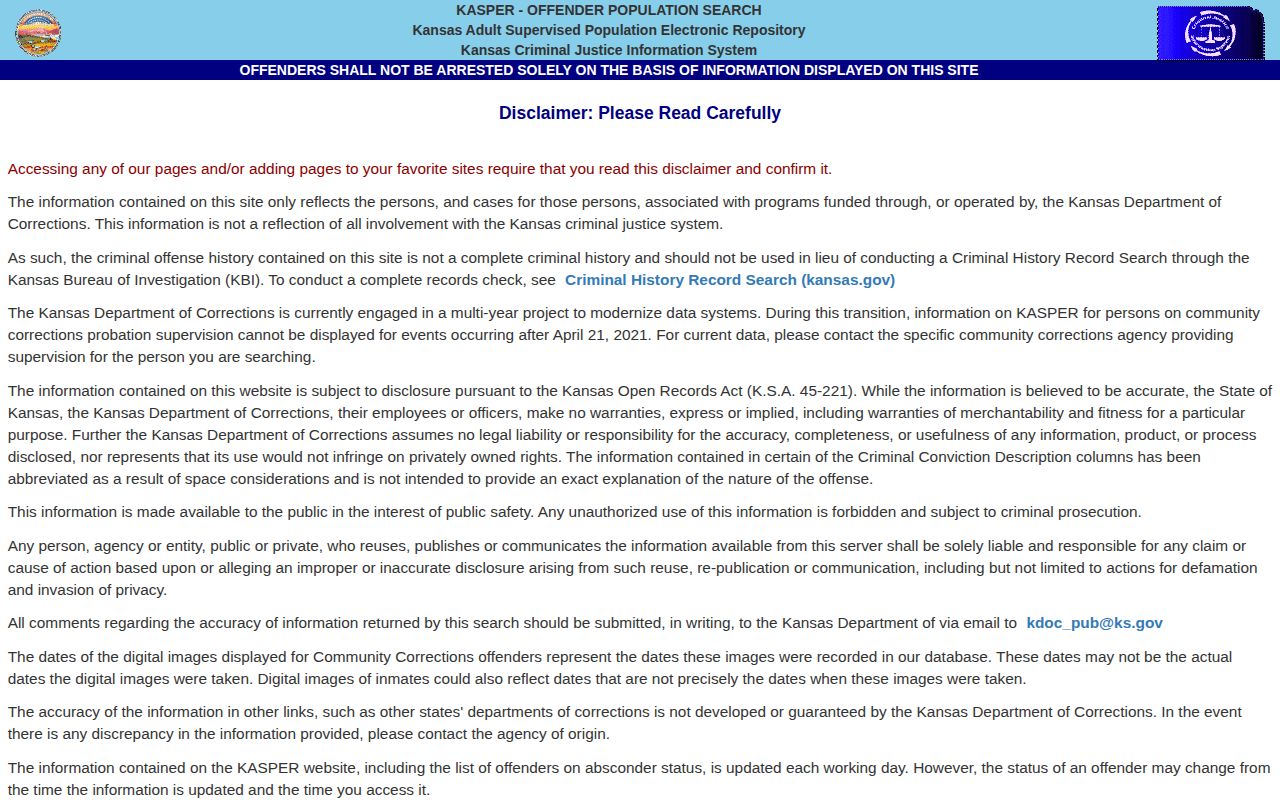
Match identifiers before using any date.
Brown County Good-Time Rules
K.S.A. 21-6821 authorizes KDOC rules for earning and forfeiting good time. For crimes committed on or after July 1, 1993, it generally caps good time deducted from the prison portion at 15 percent. This creates an 85-percent shorthand, but Kansas has no universal percentage for every sentence.
The law permits up to 20 percent for listed categories, including certain lower-severity non-drug offenses and specified drug severity groups within stated date ranges. Those cases can yield an 80-percent prison portion before other lawful factors. Off-grid, indeterminate, special mandatory, and offense-specific sentences need separate analysis.
Program credit can add up to 120 days for qualifying lower-severity cases that complete designated programs. Statutory limits apply, and sex-offender treatment completion does not earn that credit. A generic calculator cannot safely know all inputs.
The statute shown here controls good-time and program-credit limits.
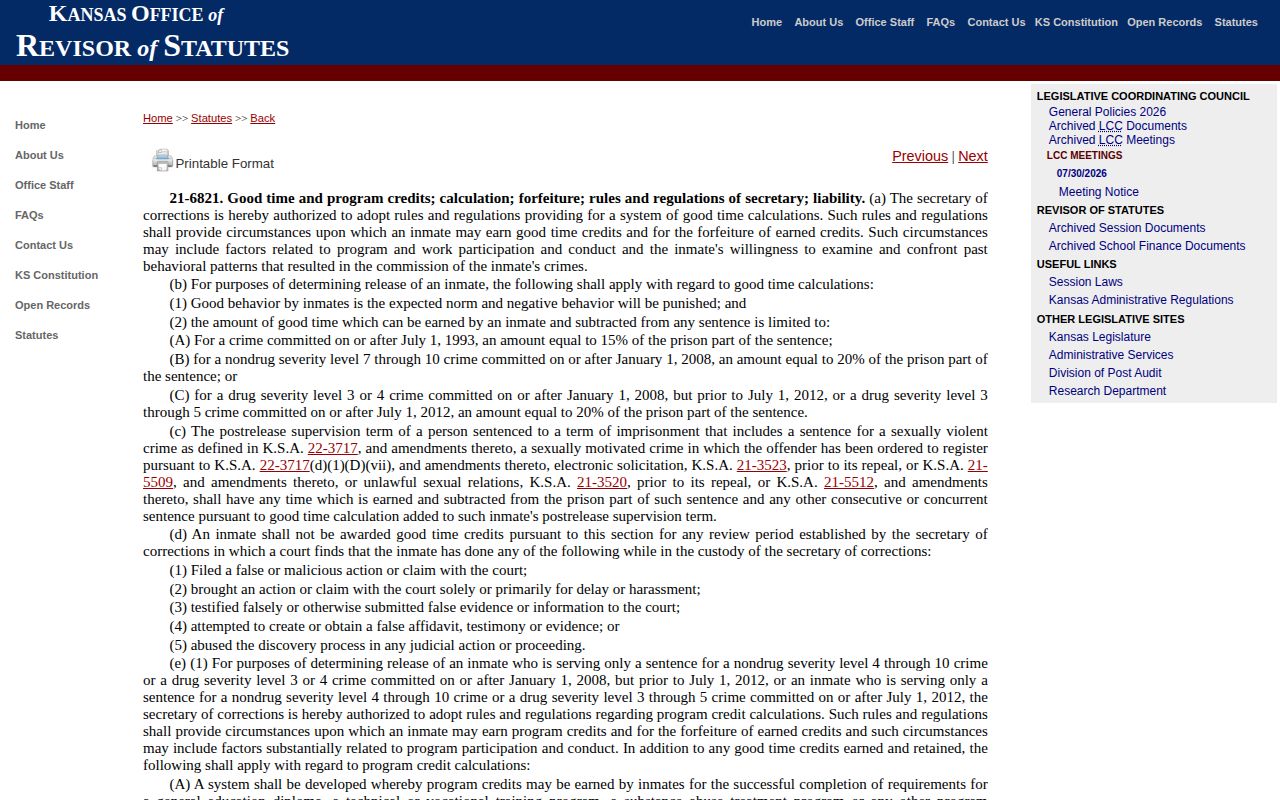
Apply its categories only after confirming the offense date and sentence.
Why Brown County Release Dates Change
Good time can be earned, withheld, forfeited, or restored. Jail and prison credit, sentence aggregation, concurrent or consecutive terms, court corrections, program credit, new cases, and revocation may also change the calculation. A detainer is a request or hold from another authority. It can turn a planned release into a transfer.
| Factor | Effect |
|---|---|
| Good-time loss | May move the estimate later |
| Program credit | May reduce a qualifying term |
| Jail/prison credit | Changes credit against the sentence |
| Multiple terms | Changes how sentences combine |
| Court action or new case | Can revise inputs or add a hold |
| Revocation | May return a person to confinement |
| Parole decision | Eligibility does not guarantee release |
For determinate cases, release from the prison portion may begin postrelease rather than end the full obligation. Older indeterminate cases generally link parole eligibility to the minimum term less retained good time, subject to exclusions. Exact law and offense date control.
Confirm Brown County Actual Release
Read several KASPER fields together. Movement out of an institution, a community-supervision type, and an assigned parole office can support release to supervision. “Discharged” is stronger evidence that KDOC duties ended. KASPER updates each working day, so urgent results still require confirmation.
KDOC locating guidance explains the Anticipated release date and related fields.
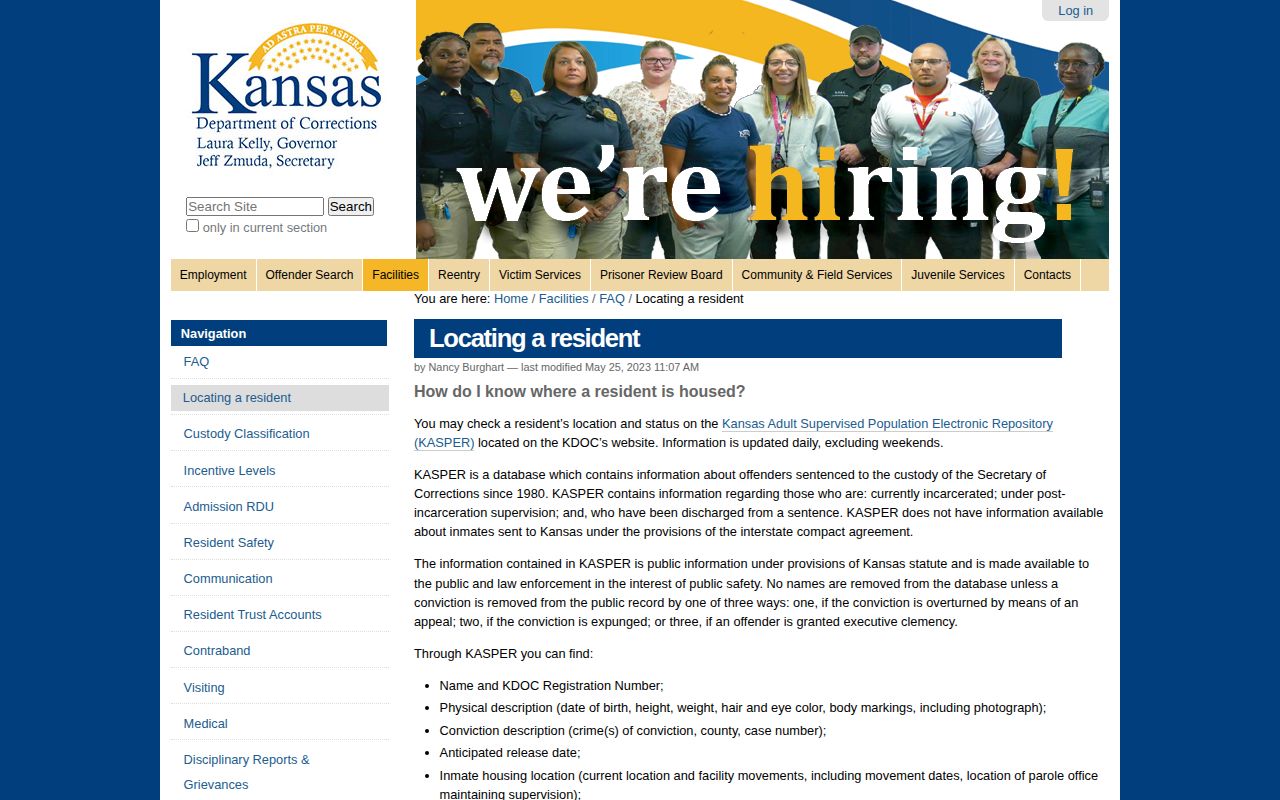
Read the date beside current movement and supervision data.
For Brown County Jail, request the booking/release sheet and verify the court authority. VINELink may provide an agency-fed alert when a matching participating record offers it. The VINELink Release Check explains registration. A transfer alert is not community release, and no result is not proof that custody ended.
Brown County Sentence Record Checklist
The sentencing journal entry is the start of a reliable date review. Record the offense date because Kansas rules changed over time. Note each statute and severity level, the prison and supervision portions, and all jail credit stated by the judge. If there is more than one count or case, determine whether terms run concurrently, at the same time, or consecutively, one after another. A missed term can make an informal estimate badly wrong.
Compare those inputs with the public KASPER record. It may include conviction county and case number, the Anticipated release date, present location, movement history, parole-office location, and supervision details. KASPER photographs are KDOC identification images, not Brown County booking photos or proof of release-day appearance. Its record generally persists unless the conviction is overturned, expunged, or clemency is granted, so the presence of a result does not show present custody.
If information appears inaccurate, KASPER directs written correction requests to kdoc_pub@ks.gov. A correction request differs from a sentence-computation dispute. Use Sentence Computation for the calculation and the sentencing court for the order.
Brown County Parole Eligibility Dates
Older indeterminate sentences use another framework. K.S.A. 22-3717 and the Prisoner Review Board process are central. Initial parole eligibility generally concerns the minimum term less retained good time, subject to mandatory periods, exclusions, and offense-specific rules. Eligibility means the Board may consider release. It is not a promise, and a future hearing list is not a decision.
Conditional release can be based on the maximum term less good time. “Parole” indicates suitability for release, while “continue” postpones a decision and “pass” denies it for a period. Full Board Review is a review status, not a grant. After a hearing, check the later KASPER status and movement, then confirm with KDOC. A scheduled date, comment session, or appeal never establishes that the prison gate event occurred.
Brown County Jail Date Limits
The live sheriff roster shows current booking information, not a projected or completed release field. It lists such items as name, booking number, charges, bond, arresting agency, and booking date and time. None supplies a reliable future exit date. A bond figure is not proof that bond was posted, and a booking date measures admission rather than sentence completion.
Ask the jail which order and credits control the local calculation. Then ask Records for the final release event after it occurs. If the person disappears from the roster, consider transfer, correction, data lag, or another outcome before concluding release. The district or municipal court docket can explain the legal authority, while the jail remains the source for when county custody actually ended. Keep the booking number and the exact date range ready when contacting Records. Those details help separate repeat bookings and let staff identify the event being requested.
Resolve Brown County Date Disputes
Start a disputed-date review with documents, not an online sentence calculator. Obtain the journal entry for every relevant case and confirm that later amended orders are included. List jail credit, prison credit, offense dates, severity levels, and whether each term is concurrent or consecutive. Compare that list with the KASPER conviction and case fields. A mismatch may belong with the sentencing clerk, while a correct order applied to a disputed KDOC calculation belongs with Sentence Computation.
Ask a focused question. Identify the field believed to be wrong, the date currently displayed, the order or credit that may affect it, and the source of that document. KDOC publishes 785-296-3317 for Sentence Computation. If the public biographical or record information itself appears inaccurate, KASPER directs written corrections to kdoc_pub@ks.gov. Those are different routes and should not be merged into one request.
A future anticipated date can move while the review is pending. Good-time forfeiture or restoration, qualifying program credit, a corrected court order, a new sentence, revocation, or an outside hold may change the lawful result. Save the access date and recheck movement and status after the anticipated day. Confirmation requires a completed movement, community-supervision entry, county release record, or other agency event, not the passage of the predicted date alone.
When calling about a disputed date, note the representative, contact date, and next verification step. That short record helps reconcile later portal updates with the agency explanation and any amended court order.